01 / TRAINING
Stronger. Set by set. Two full-body workouts, three training days. Choose A or B and learn each movement with an image and clear cues.
Your rhythm Week 1: A–B–A. Week 2: B–A–B. Always leave at least one recovery day between sessions. Around 45–70 minutes per session.
Control before load Warm up gently for 5–8 minutes, then do light preparation sets. Usually keep 1–3 repetitions in reserve.
Start lighter Start with 1–2 sets using a light load. Progress when your technique feels comfortable and you recover well.
Stop for pain, dizziness or unusual shortness of breath. Seek individual guidance for existing conditions, pregnancy or return from injury. Illustrations provide orientation and do not replace in-person instruction.
Choose your workout Start workout A Workout A Workout B All 10 exercises
Actual duration (minutes) Save session locally
The guided workout uses the lower set count in the plan. Timers continue; your device may suppress background announcements.
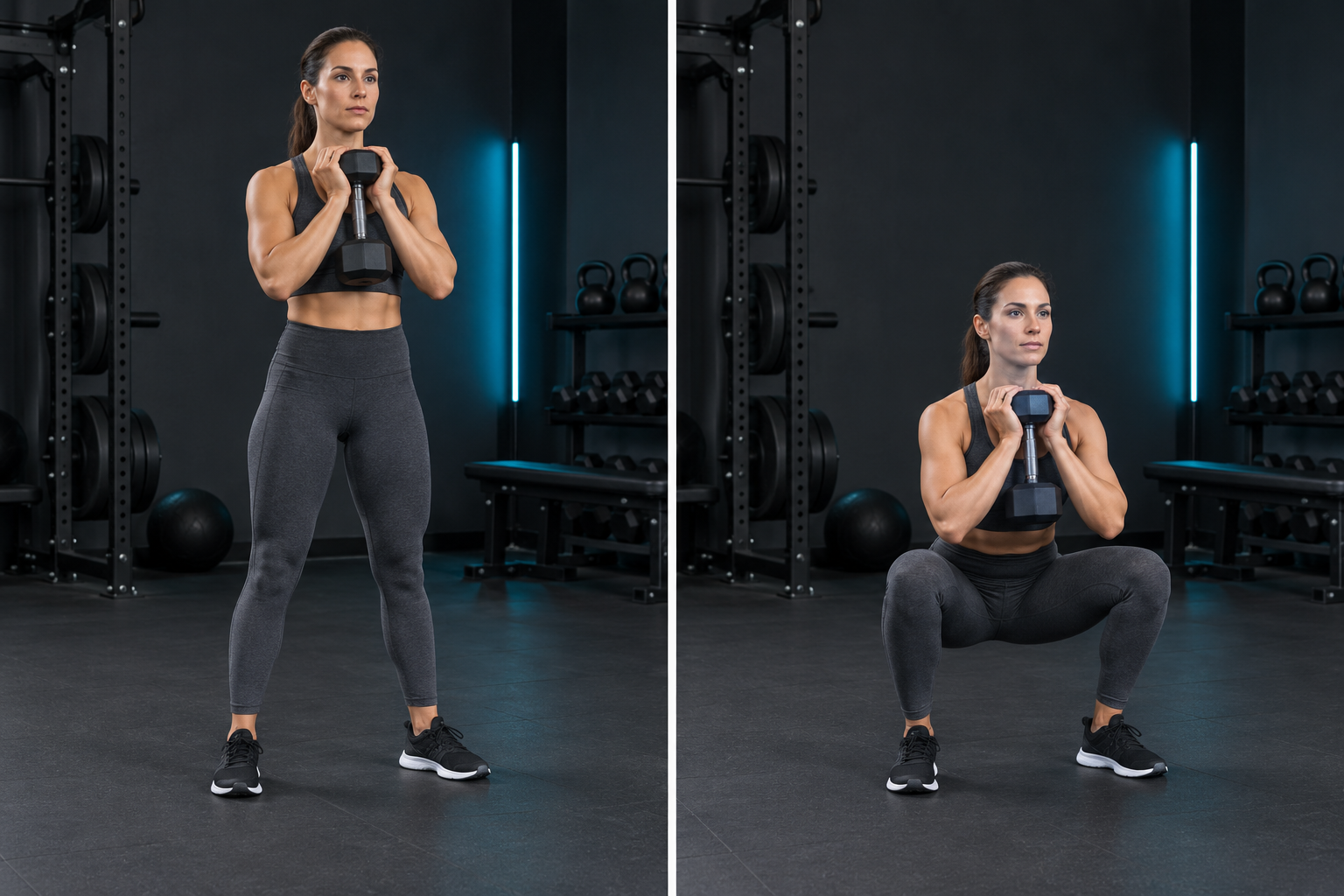
AI illustration · Follow the written movement steps.
Goblet squat A Legs & glutes
3 × 6–10 150 s rest
Hold a light dumbbell at your chest. Stand with feet about shoulder-width apart and toes turned slightly out. Brace your trunk. Bend your hips and knees slowly, keeping knees in line with toes and pressure across the whole foot. Descend only as far as you can comfortably control. Push evenly through your feet to return to standing. Make it easier & avoid mistakes Easier: Practise without weight first; if helpful, sit down onto a stable chair and stand back up.
Avoid: Lifting heels, uncontrolled inward knee movement or forcing depth.
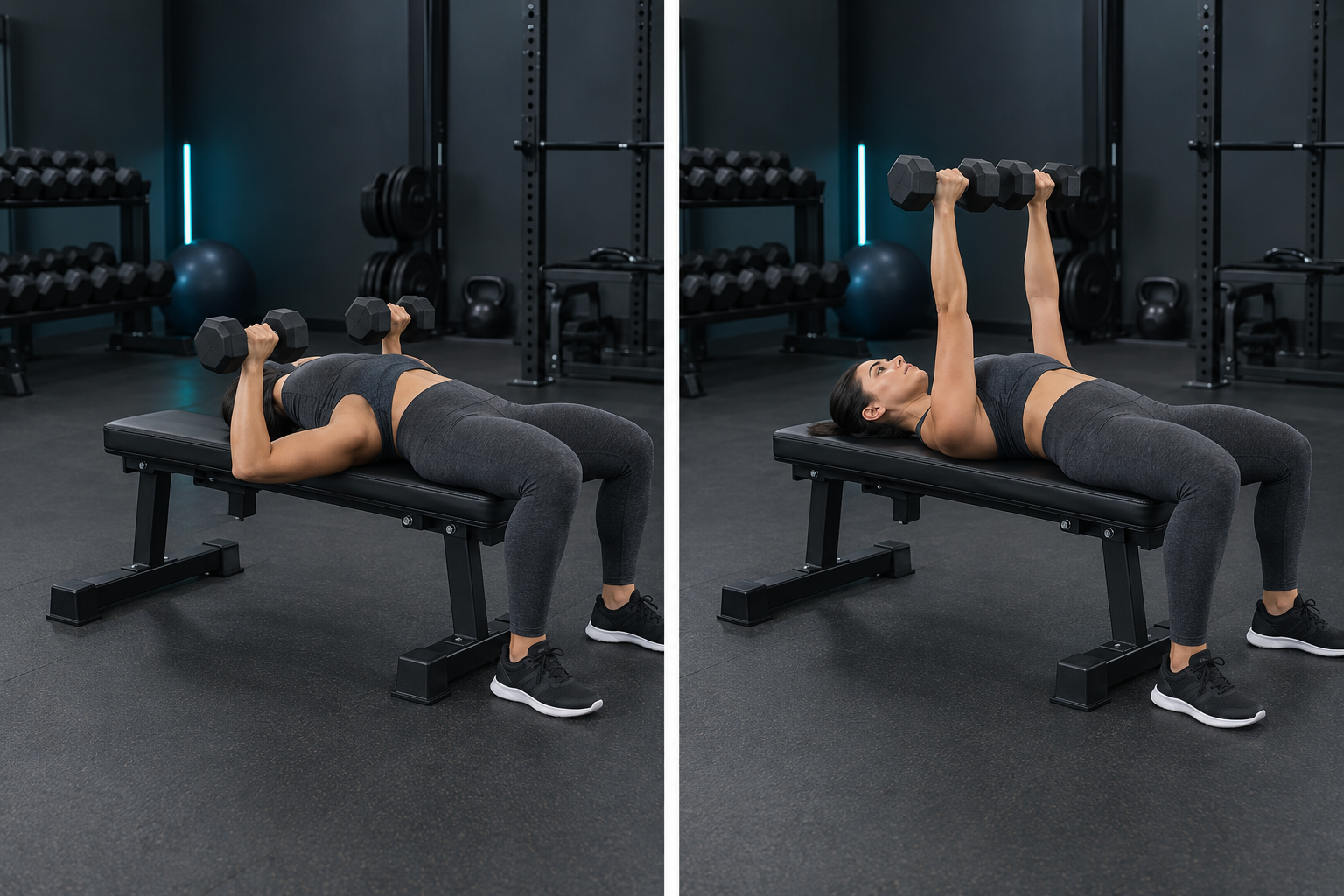
AI illustration · Follow the written movement steps.
Dumbbell bench press A Chest & triceps
3 × 6–10 150 s rest
Lie on a stable bench with feet on the floor, hips supported and shoulder blades settled. Lower light dumbbells beside your chest under control. Keep forearms roughly vertical and elbows comfortably angled in. Press evenly upward while exhaling. Finish without forcefully snapping your elbows straight. Make it easier & avoid mistakes Easier: Use incline push-ups against a stable bench or wall. Get help learning safe dumbbell handling.
Avoid: Excessive weight, lifting your hips or dropping the weights.
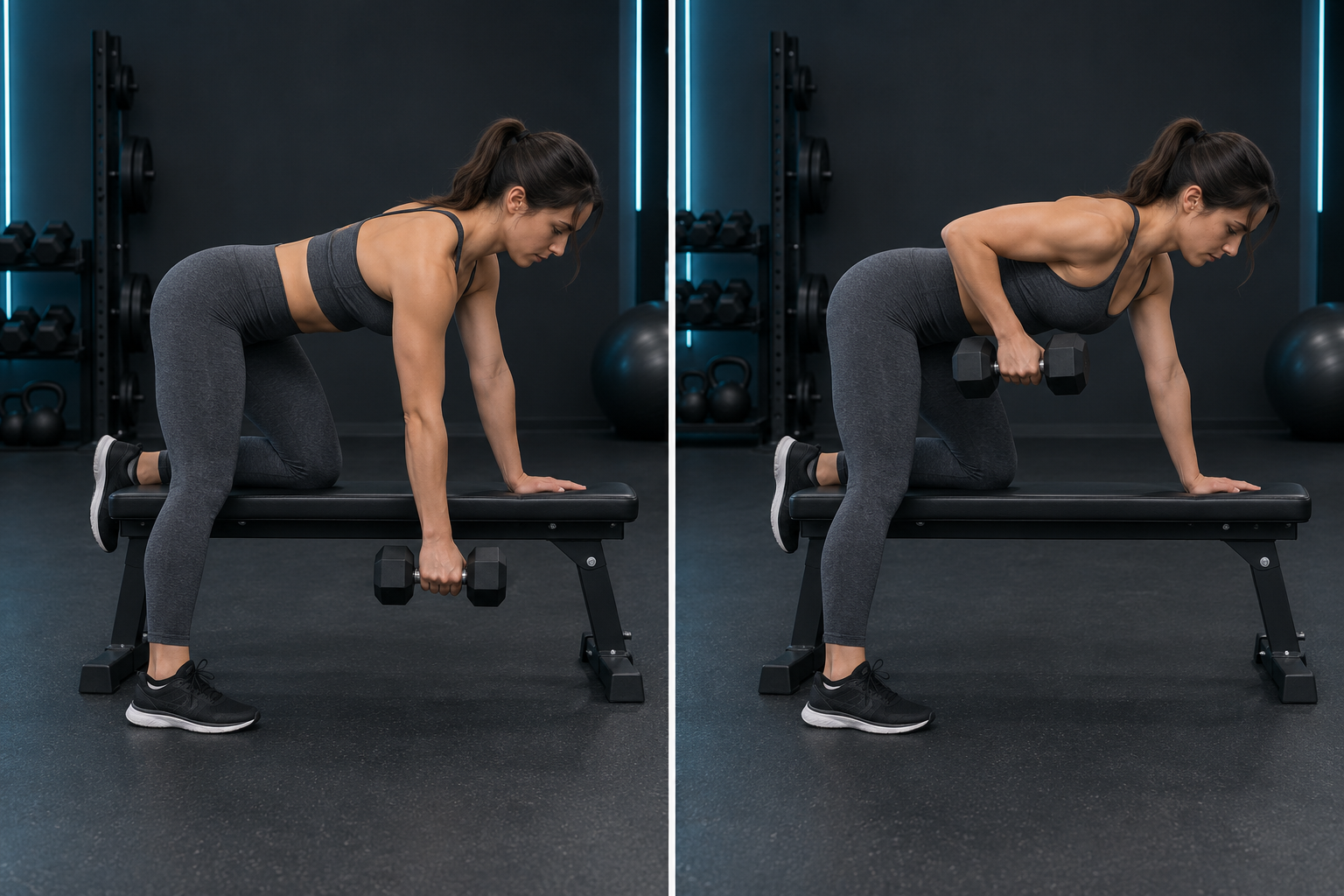
AI illustration · Follow the written movement steps.
Supported dumbbell row A Back & biceps
3 × 8–12 105 s rest
Support one hand and knee on a stable bench. Keep neck and back neutral and hold the dumbbell in your free hand. Draw your elbow toward your hip without twisting your torso. Lower slowly. Repeat on the other side with the same number of repetitions. Make it easier & avoid mistakes Easier: Use less weight or an instructed seated rowing machine.
Avoid: Swinging, shrugging or rotating your trunk.
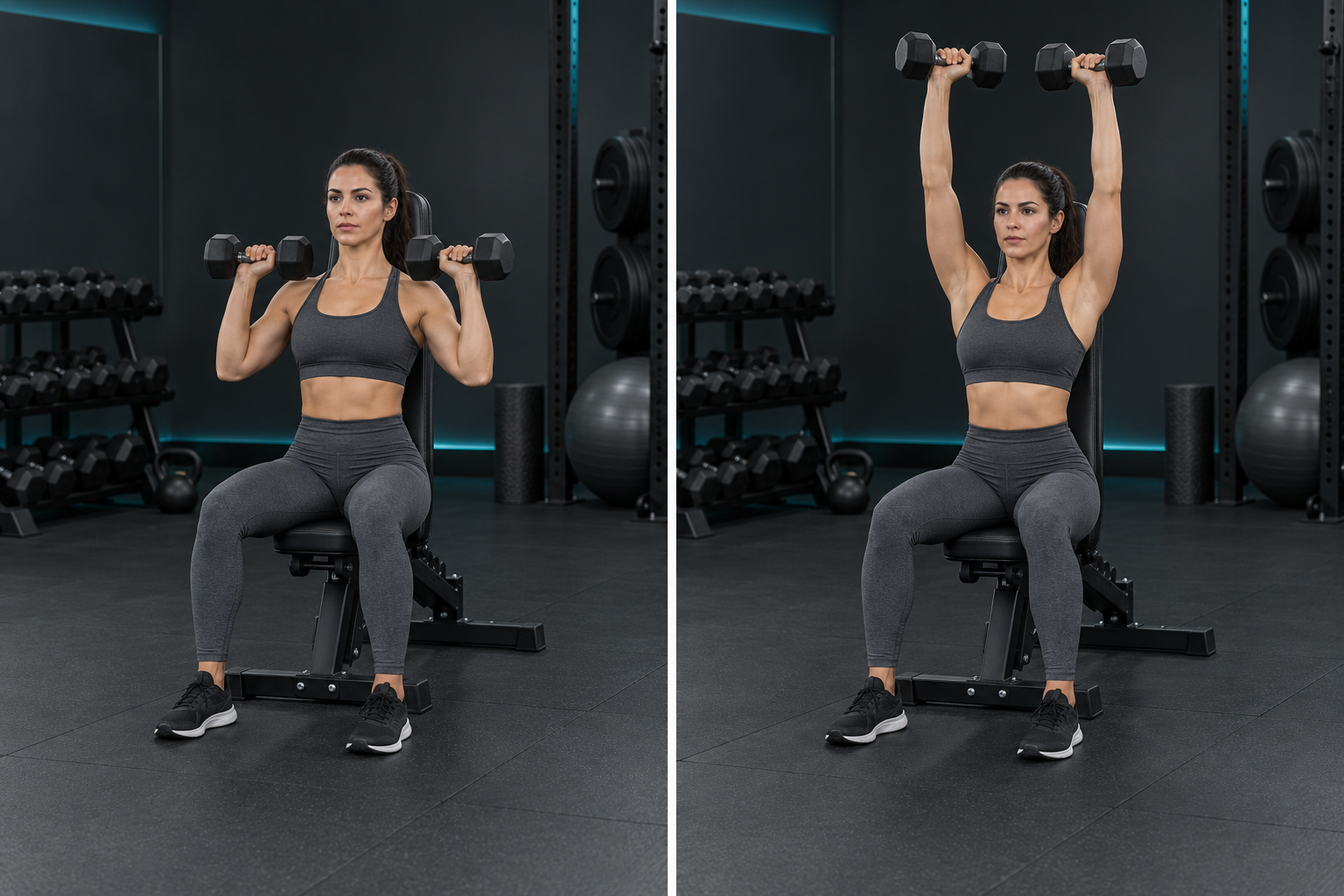
AI illustration · Follow the written movement steps.
Seated shoulder press A Shoulders & triceps
2–3 × 8–12 105 s rest
Sit on a stable bench with back support. Keep feet on the floor and dumbbells around shoulder height. Keep your trunk steady and press both weights upward under control. Lower slowly into a comfortable, pain-free starting position. Make it easier & avoid mistakes Easier: Use very light weights and a comfortable range. Seek advice for shoulder pain.
Avoid: Excessive back arch, momentum or pressing through painful ranges.
AI illustration · Follow the written movement steps.
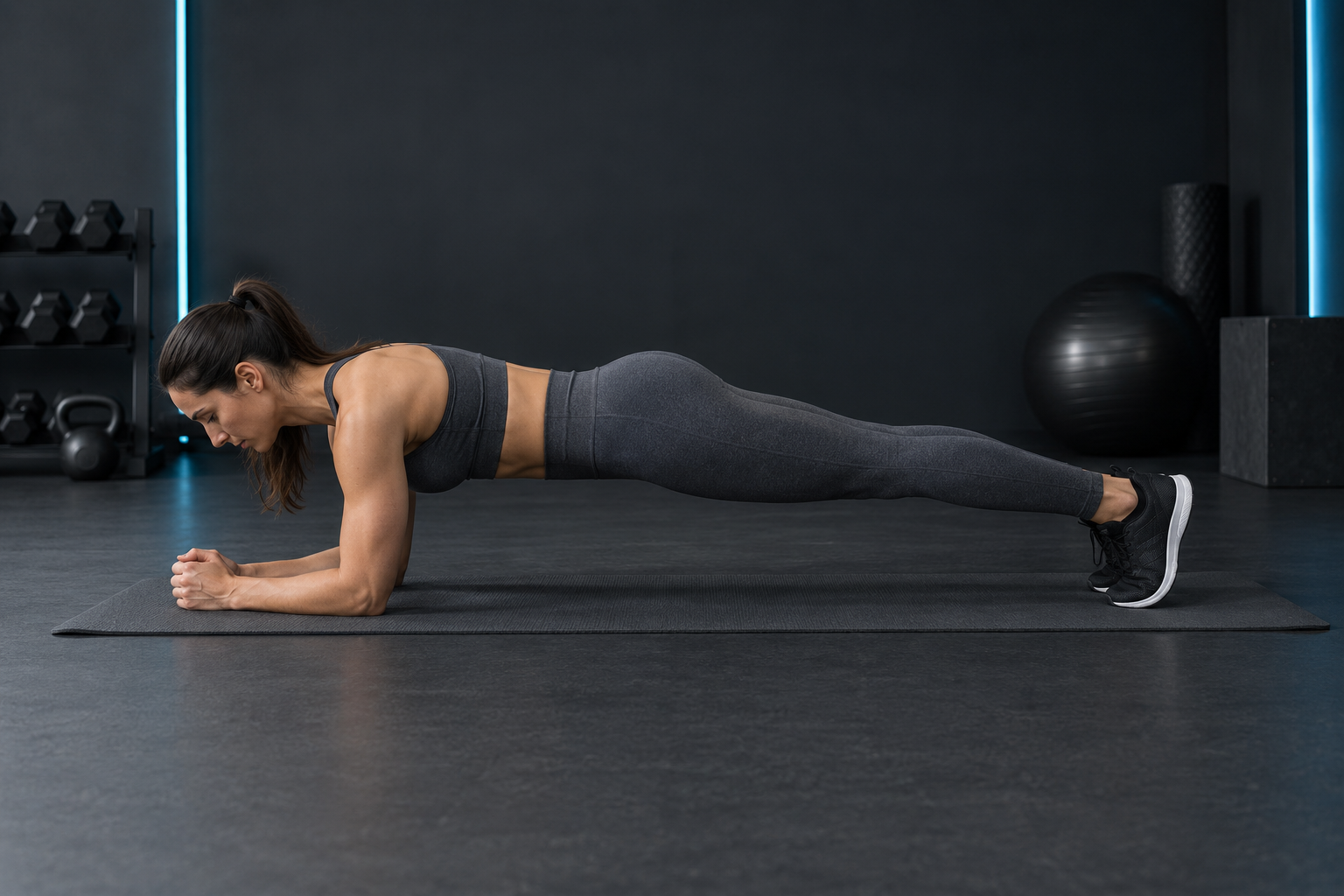
Forearm plank A Core
3 × 30–45 s 60 s rest
Place forearms on a mat with elbows under shoulders. Extend your legs or keep knees on the floor. Gently brace your abdomen and glutes. Keep your head, trunk and hips aligned. Breathe steadily. Finish when you can no longer maintain control, even if the timer has not ended. Make it easier & avoid mistakes Easier: Keep knees down or elevate your forearms. Start with 10–20 seconds.
Avoid: Holding your breath, sagging hips or shrugging shoulders.
AI illustration · Keep your neck neutral; choose your own depth.
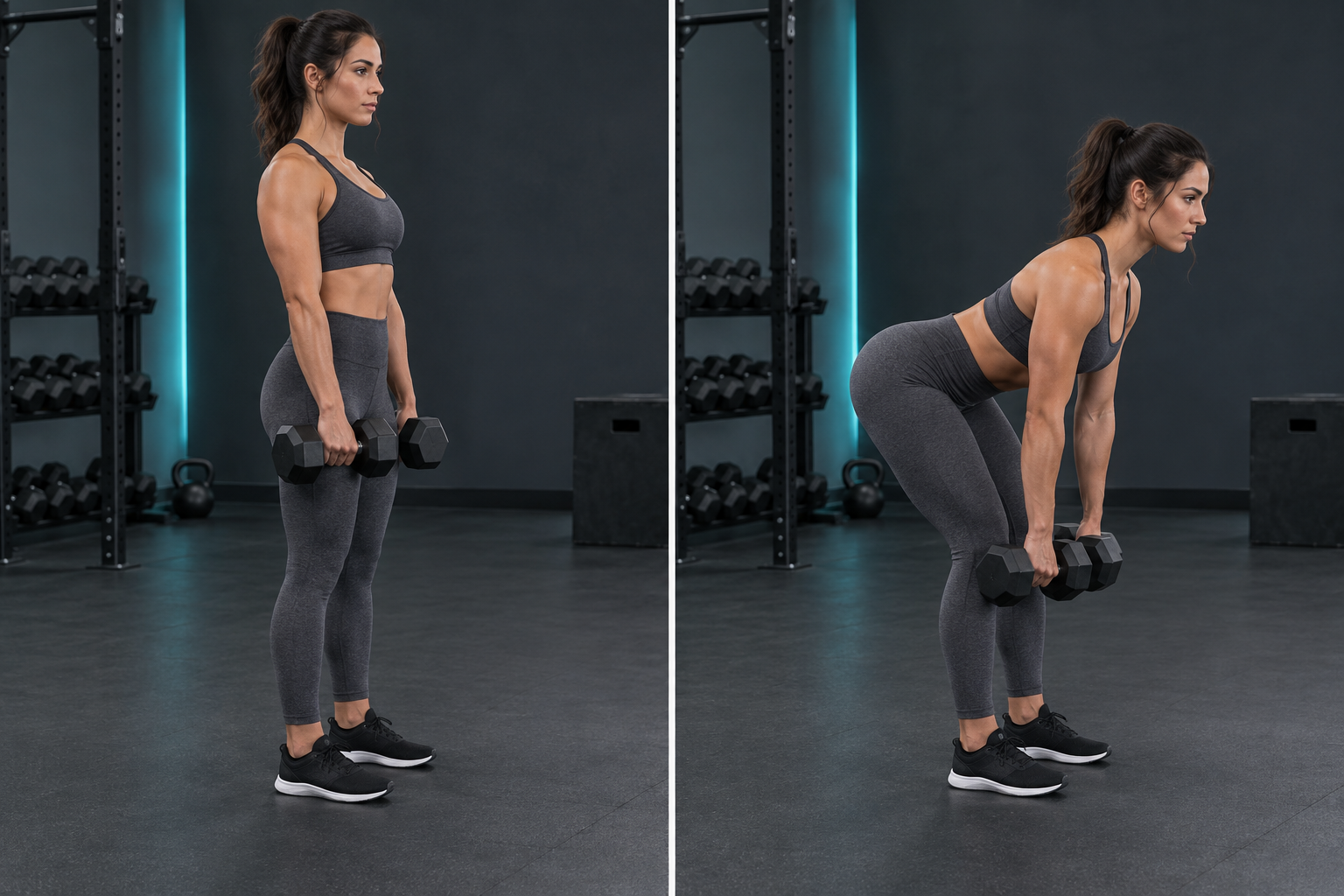
Romanian deadlift B Hamstrings & glutes
3 × 5–8 150 s rest
Stand hip-width apart with light dumbbells in front of your thighs. Keep knees softly bent and spine neutral. Send your hips backward. Lower the weights close to your legs with little change in knee bend. Stop at a comfortable hamstring stretch before your back rounds. Drive through your hips to stand without leaning backward. Make it easier & avoid mistakes Easier: Learn an unloaded hip hinge first. Get in-person instruction for this more technical exercise.
Avoid: Rounding to reach lower, jerking from your back or turning the movement into a squat.
AI illustration · Follow the written movement steps.
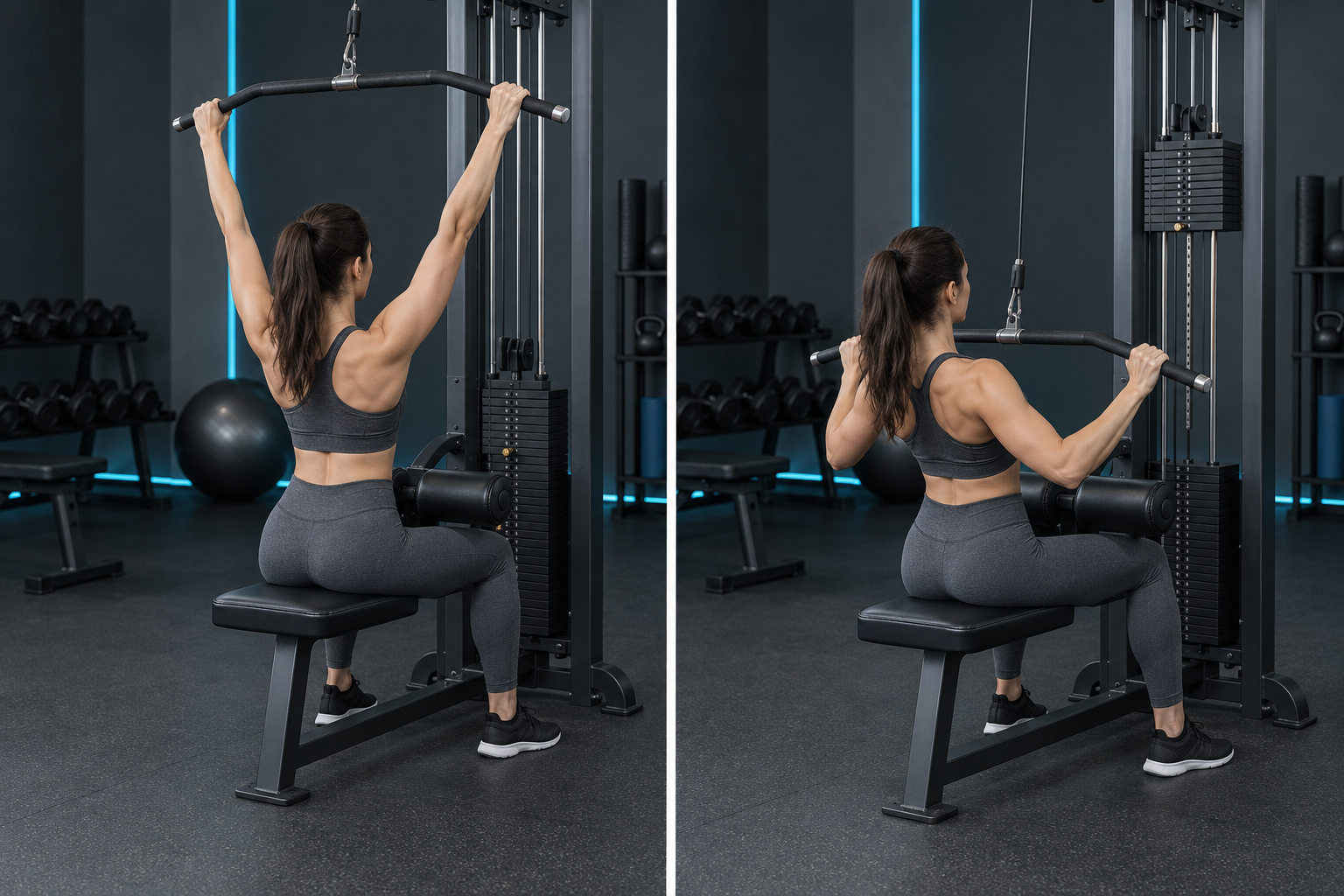
Lat pulldown B Back & arms
3 × 8–12 105 s rest
Adjust the seat and thigh pad. Take a comfortable grip a little wider than your shoulders. Draw elbows downward and pull the bar toward your upper chest while keeping your torso mostly steady. Let your arms return upward slowly without allowing the stack to snap back. Make it easier & avoid mistakes Easier: Reduce the load and ask for a machine setup demonstration.
Avoid: Pulling behind your neck, swinging or shrugging.
AI illustration · Follow the written movement steps.
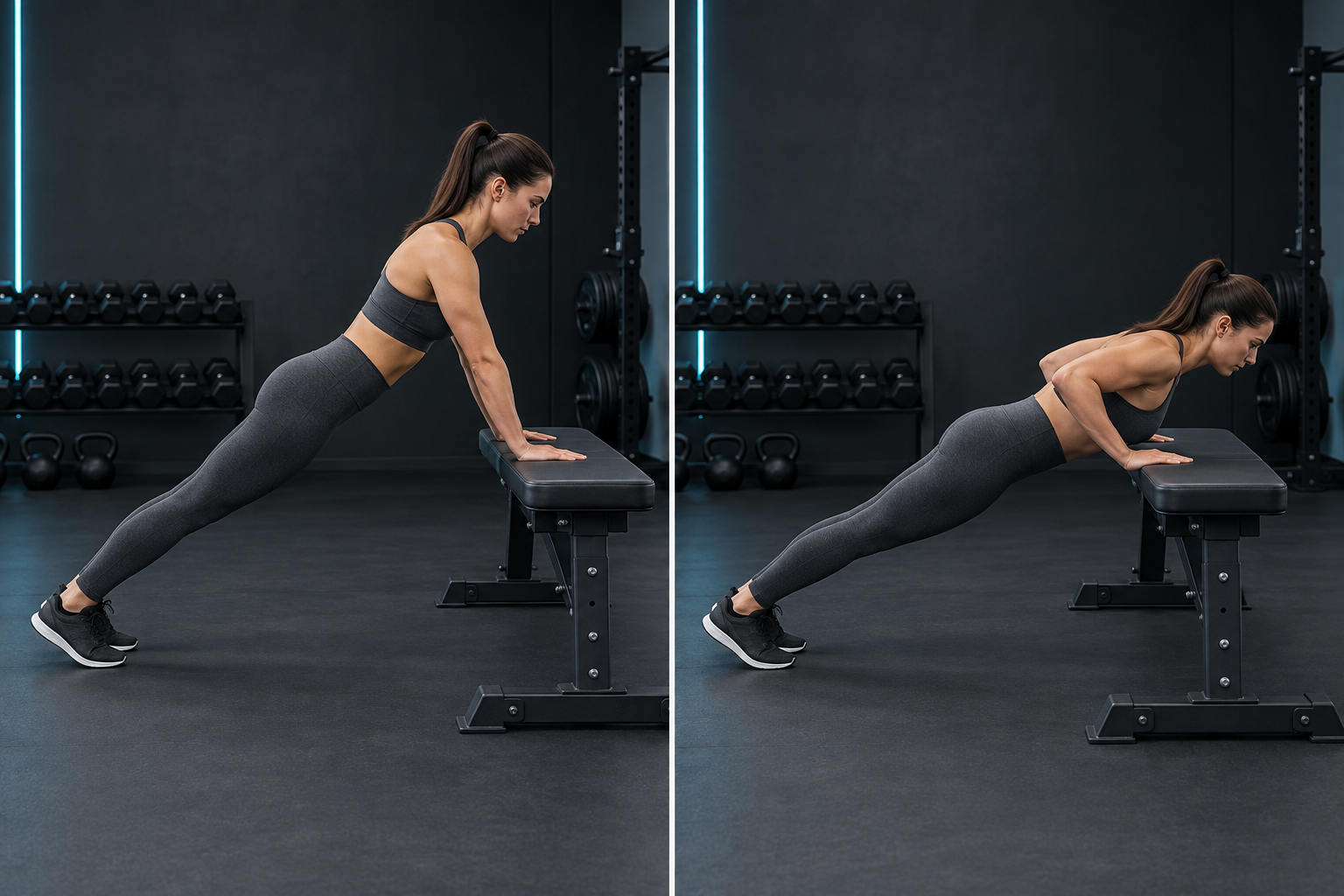
Incline push-up B Chest, arms & core
3 × 8–12 105 s rest
Place hands slightly wider than shoulders on a stable, non-tipping bench. Step your feet back. Keep your body aligned and lower your chest toward the bench, with elbows angled back. Push back up under control. A higher support makes the exercise easier. Make it easier & avoid mistakes Easier: Begin against a solid wall before progressing to a lower support.
Avoid: Sliding furniture, sagging hips or widely flared elbows.
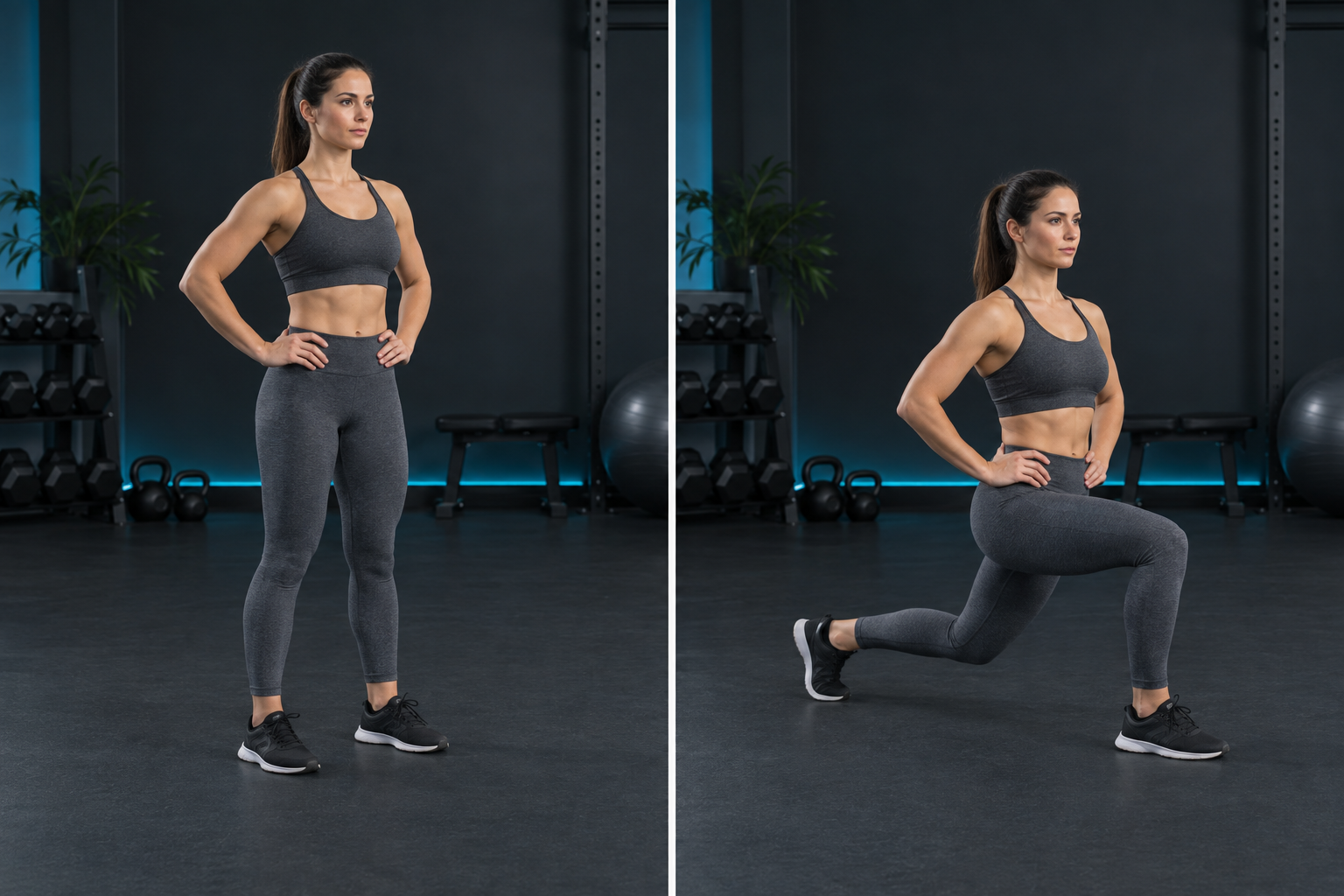
AI illustration · Follow the written movement steps.
Reverse lunge B Legs & balance
2–3 × 8–12 / side 90 s rest
Stand upright with feet hip-width apart. Use a fixed support for balance if needed. Step one foot back and bend both knees under control. Keep your front knee tracking with your foot. Push through the front foot to return to standing. Repeat on both sides. Make it easier & avoid mistakes Easier: Take a smaller step, reduce depth and use a fixed support. Start without weights.
Avoid: A tightrope stance, dropping your knee hard or uncontrolled knee movement.
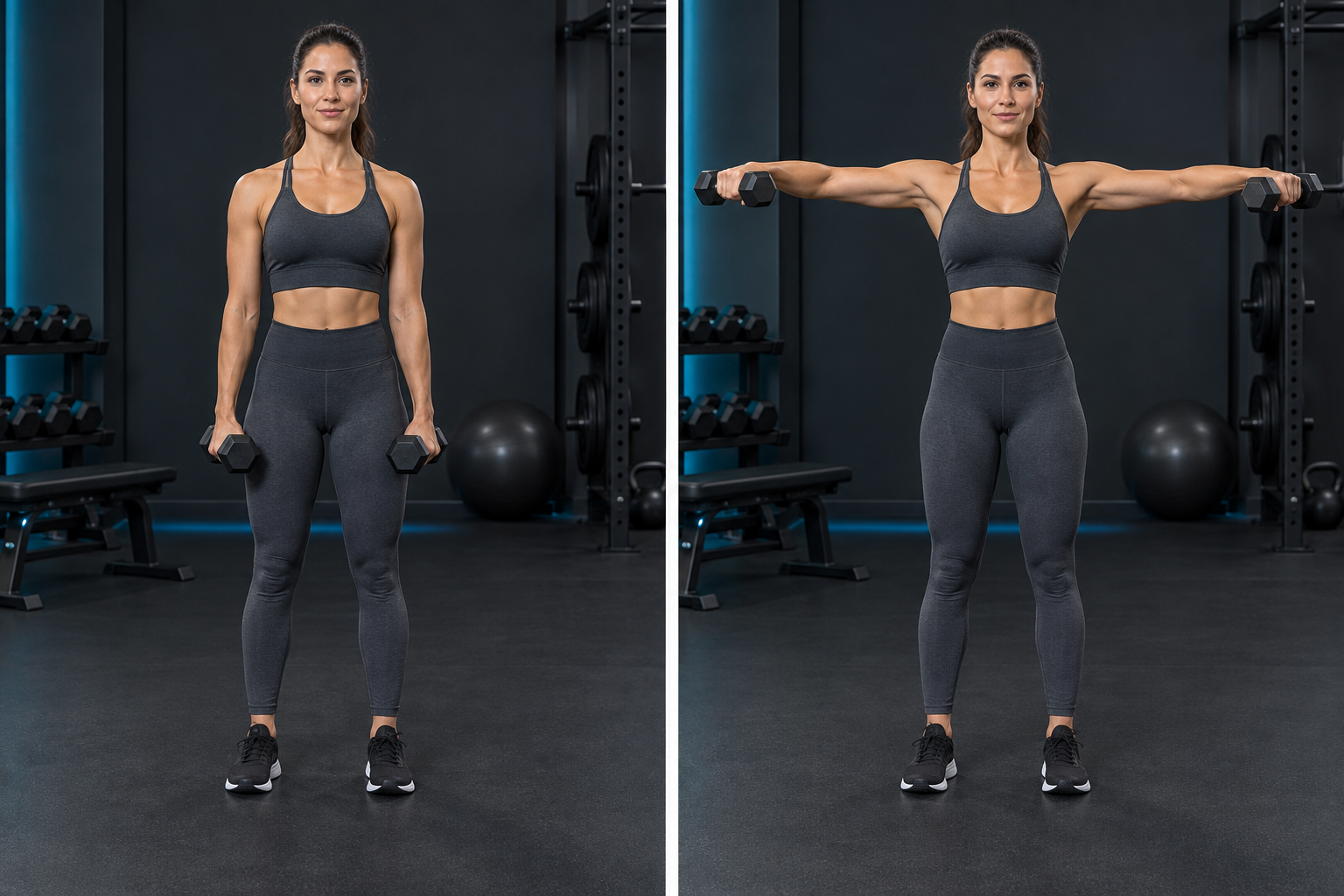
AI illustration · Follow the written movement steps.
Dumbbell lateral raise B Side shoulders
2–3 × 12–15 75 s rest
Stand steadily with very light dumbbells by your sides and elbows softly bent. Lift your arms out and slightly forward to around shoulder height, as comfortable. Lower slowly with relaxed shoulders. Keep hands neutral rather than turning thumbs sharply downward. Make it easier & avoid mistakes Easier: Use lighter weights and a smaller range. Stop if you feel pain.
Avoid: Swinging your torso, shrugging or using excessive weight.
How to progress When you complete all sets at the top of the repetition range with control and reserve for two sessions, add a small available weight increment. Do not add weight automatically every week. If recovery is poor, reduce volume or take a break first.
Only ten minutes? Take a brief walk, or practise unweighted chair stands and wall push-ups. Begin with a few controlled repetitions. This short option is an entry point, not a full replacement for the plan.
NASM · Romanian deadlift ↗
AHA · Getting started and exercise barriers ↗